
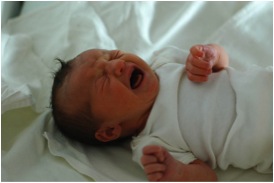
Babies cry as a form of communication. That statement is viewed by most people as a fact and not an opinion. The problem for parents isn’t determining if their baby is communicating. Their problem is deciding how to respond to this communication.
For a newborn, a baby cries in response to both external and internal stimuli. These are things like the temperature of the room or uncomfortable clothing (external stimuli) or hunger, pain, or discomfort (internal stimuli). A newborn’s cries should never be ignored. Newborns have a very immature nervous system so they are extremely sensitive to the changes in and around them. They should be fed when they are hungry, changed when they are wet or dirty, made comfortable if they are in an uncomfortable position, and generally comforted when they are crying.
After the first 12 weeks of life, babies begin to have differentiated cries. Parents can begin to tell the difference between a “hungry” cry, a “tired” cry, a “pain” cry, and even an “I’m bored” cry. Although a baby’s cries begin to communicate a clearer message to parents, their cries still communicate a message so they still should be responded to when they cry.
Why does it matter if their cries are responded to quickly? They’re just babies, they’re never going to remember it anyway. It matters tremendously! Erik Erikson, a German-born psychologist presented stages of development that children move through as they develop emotionally. The first stage of psychosocial (emotional and social) development, trust vs. mistrust, occurs during the first year of life. During this stage of development, a baby develops a sense of trust in other people, in themselves, and in the world around them if their needs are met. HOW? When they are hungry, someone comes to them and makes their hunger go away…they start to associate the comfort that was brought to them with the person that brought them comfort. When they are uncomfortably hot and they cry to let someone know, someone comes in, sees that they are sweaty, and puts them in cooler clothes and makes them comfortable. When their stomach hurts, they cry to let someone know and someone comes in and rocks, soothes, or burps them, and then they are comfortable. They learn to TRUST the people around them and in the world that they are living in because they are responded to when they have a need. For clarification, the “mistrust” portion of Erikson’s stage, trust vs. mistrust, is the opposite of the process explained. When the baby cries, no one comforts them. When they communicate a need, no one responds, or they have to wait for a long period of time before their need is met. The message that they receive is that their needs are not important, that people will not take care of them when they need care, and the foundation is laid for insecure attachments to form with parents and caregivers.
This process of learning to trust the caregivers in the baby’s life is referred to as attachment. Strong attachments form the basis of a secure infancy, toddlerhood, childhood, adolescence, and even adulthood.
 Do This Not That Blog